AMERICAN CODA
A Literary Historical Fiction
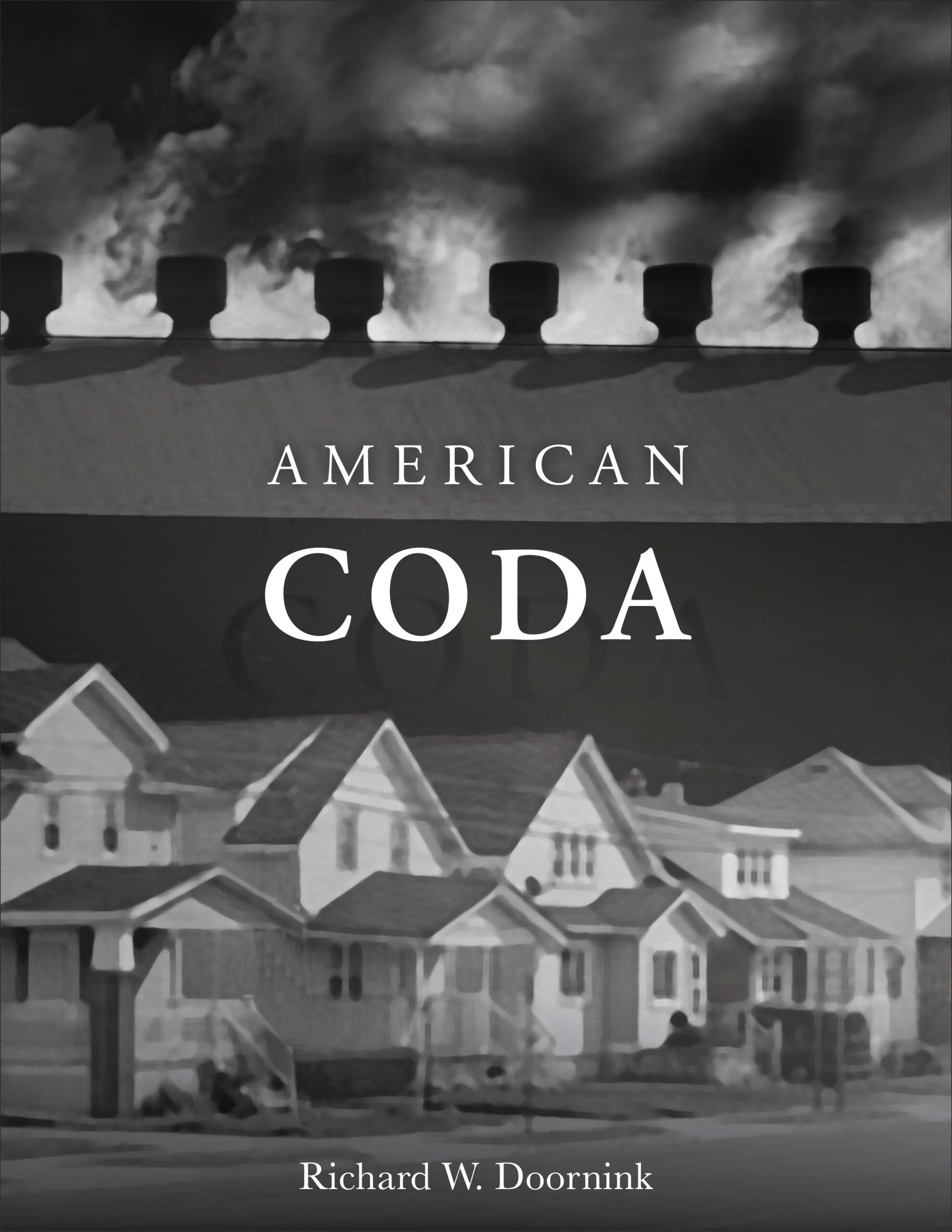
American Coda is a post-American Dream examination of working-class America between 1950 and 1994. The book looks back on the American experience, summarizing various highs and lows, triumphs and failures, while examining the cultural shifts that have occurred over time.
A generational “finale,” centering on characters, family, and work which reflects their American experience during and after a significant era by telling the story of an individual’s life and the experience of a community reaching its endpoint.
It is a character-driven narrative that also deals with immense, unresolved grief and trauma, the story’s timeline vast, the pacing is deliberately slow and literary. An emotional journey that is deeply internal, exploring themes of duty, quiet suffering, the complexities of male friendship, and the profound sense of loss that accompanies the end of an era.
Steeped in a gritty, melancholic realism, it captures the post-war optimism of the 1950s and follows its slow, inexorable decay into the rust-belt disillusionment of the 1980s. The world is one of roaring furnaces, smoky barrooms, and tightly knit working-class neighborhoods in Buffalo, NY.
American Coda conveys a sense of finality or closure—political, cultural, personal, and historical—offering an opportunity for reflection on the nature of America and its various legacies. In this sense, the book does not end with a conventional “resolution,” but with a sense of conclusion, where things are “settled” in their finality.
A story epic in scope and intimately personal in its focus, this is a book that invites readers to consider what it means to close a chapter, whether that be in the life of an individual, a society, or an entire nation.
Advanced Reader Quotes
“I love the story of the main characters, and the quasi-weaving in and out of the activities of the main characters’ lives. There are lots of watershed moments in the book which will keep your readers wanting to read on and learn more, especially readers who can relate really to the demise of Bethlehem Steel and its subsequent impact on a once sprawling Pan-American city.” – Andy S.
“I love the character descriptions and arch outline of each. From a historically accurate perspective, this is amazing and greatly describes that history does repeat itself. Also shows how these events influence a generation and their viewpoint of the world. As a gen-xer, I often feel I am numb to so many things happening now because I saw most of it while I was growing up…just in a different country or different leader.” – Travis W.
“It’s an excellent story. I love Buffalo, I love Buffalo on Lake Erie, I love the weather, I love the characters and their ties to a dying steel industry, and I love the love stories. It all hangs together very effectively.” – Peter D
“I read the manuscript pretty much straight through on the Friday and Saturday after receiving it. It kept my interest so to me that says it has a story that grabs the reader. As far as character development, I like seeing the path that Harry and Peg are on which I would describe as becoming more open-minded given where they begin from family, class, education, experience and the what is the range of the possible. Also, I have probably read most of the Buffalo, Western New York books both fiction and non-fiction. I don’t think there is anything quite like your manuscript which is good.” – Thomas S.
1967 – A Coming of Age Story
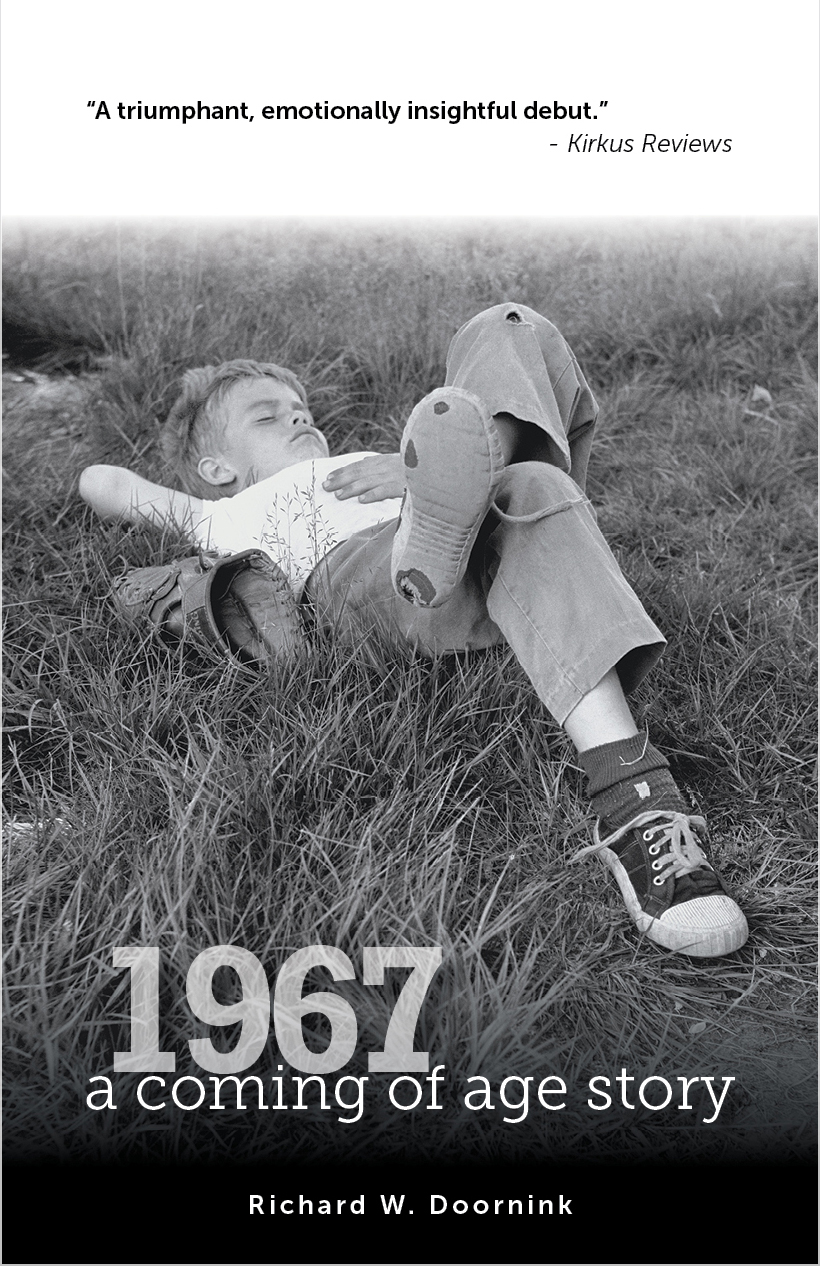
A strongly written, moving account of a young boy taking his first steps to independence and true sense of self. Set in a small prairie town over a one year period, “1967” provides a wonderful portrait of a time and place long gone.
Seen from the young boy’s perspective, devoid of reflection, the reader is pulled along within the frame of his experience – his point of view, his language, and his understanding. It becomes clear that the boy’s “growing up” has less to do with physical development than with recovering a buried memory.
Lacking a real moral centre, the main character is an anti-hero but immensely likeable, for although he is canny and quick-witted, he is nevertheless an innocent child, prisoner of his cultural and social-economic class.
While “1967” provides a devastating look at an impoverished existence, empty of expressed love or gentle guidance, the evocative imagery and power that fuels the writing provides vivid proof that one can survive childhood.
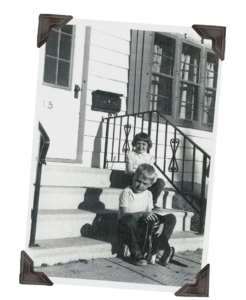
“… a surprisingly moving account of a young boy at a true turning point in his life.”
– Isabel Huggan, author of “The Elizabeth Stories” and “Belonging”
Twelve Stories about Fire
Available sooner rather than later!
She sat crossed-legged on the bed, naked except for his hat and unbuttoned uniform jacket.
“Just what does the little symbol mean? I’ve always liked the look of it. Reminds me of being a cop, or maybe a sheriff from the olden days.”
He watched as she held the material of his uniform between her hands, her finger circling the metal badge she had referred to as a “little symbol.” In the slice of light that cut through the slightly open hotel curtains he could see her still-hard nipples, and wondered if they were always like that.
“First of all, it’s definitely not a cop’s badge. Or a sheriff’s badge. Everyone gets it confused.
“It’s actually based on the Maltese Cross. Goes back to around the fifteenth century and represents the lands, eight of them, from the Order of St. John. I think the main thing it’s supposed to depict, though, were the eight obligations of the knights.”
“Ooo,” she cooed, “sounds all very romantic. Knights, horses, damsels in distress.” She laughed. “Have you come to rescue me, my fair knight, or have you come to simply rape and pillage?”
She’d leaned back, her breaasts flattened and off to her sides, her hair a tangled mess. She ran one hand slowly down her stomach, stopped at her belly ring, and then proceeded down between her legs.
“From the look of things,” he said, “I don’t have to do much to enter your kingdom. Appears to me the drawbridge is down and I can just ride right in.”
Twelve Stories About Fire is a collection of separate short stories, each with fire as the central theme. Underpinning the collection is a full-length novel, spread throughout the book, about two characters (featured in some of the short stories) who meet, marry, and fall apart—relationship wise.
The overall narrative is tied together through a series of flashbacks in an interview format and given by one of the two main characters, a once-successful writer.
“It’s about love – so it can’t have a happy ending”
– R.W.D.
P.S. “Everything is Copy” – Nora Ephron
